Only the Rich Can Play by David Wessel
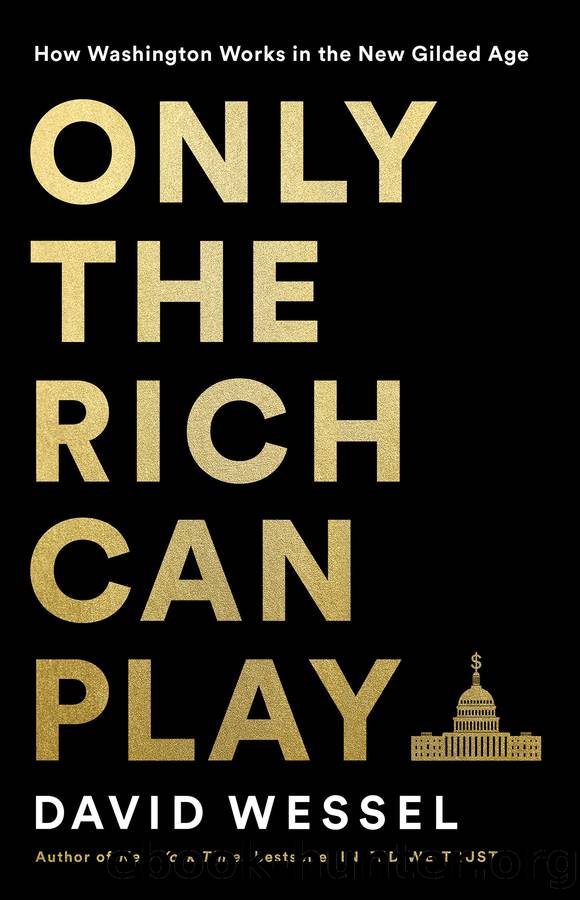
Author:David Wessel [WESSEL, DAVID]
Language: eng
Format: epub
Publisher: PublicAffairs
Published: 2021-10-05T00:00:00+00:00
CHAPTER TEN
Portland: Tax Breaklandia
I STARTED MY QUEST IN PORTLAND, OREGON, FOR SEVERAL REASONS. In some other states, reporters found suggestions of political favoritism or corruption in the zone picking. There is no sign of that in Oregon. Economically, Oregon isnât as poor as states in the Deep South nor as rich as states in the Northeast. It has an urban corridor along I-5 with large rural areas to the east. It has poor parts and rich ones. On average, the census tracts Oregon chose as OZs were neither the most nor the least economically distressed among those eligible; they were about average.1 So, while Oregon is politically left of center and whiter than most states, it seemed a good laboratory to test what Opportunity Zones are doing.
Shortly after the Tax Cuts and Jobs Act passed in December 2017, Chris Harder, director of Business Oregon, the stateâs not-so-subtly named economic development agency, began seeing references to OZs on Twitter and elsewhere. He asked his government affairs deputy, Nick Batz, to look into them. âIt creates domestic tax havens,â Batz replied in an email that captured the essence, if not the details. âIf Iâm an investor, I park my capital gains in the safest company I can find in one of these zones and wait ten years to withdraw⦠tax free.â2
After New Yearâs, the email traffic around OZs grew heavier. The office of Governor Kate Brown, a Democrat, inquired: What is this program? Is this something we should be caring about? The White House was sending emails to governorsâ offices promoting OZs, but Harder and others wondered: Is this just a talking point for the administration or is this a program?
Over the next few months, however, Harder, Batz, and the governorâs office determined that OZs were a real programâand one that demanded extraordinarily quick decisions. The US Treasury told Oregon that 366 of the stateâs 834 census tracts were eligible to be OZs. Brown had until March 21 to tell the Treasury which 86 tracts the state wanted to designate.
The state would have to make these determinations without really understanding what the brand-new program was. On February 2, Nick Batz sent the governorâs chief economic adviser, Jason Lewis-Berry, a five-page memo outlining the basics. âNothing really like this has been tried before,â he wrote in an email. âIt remains to be seen how quickly and effectively capital can be mobilized.⦠At present, there are uncertainties about specific mechanics that may not be resolved for at least several months.â3
Illustrating just how baffling OZs were to governorsâ offices, Batz (correctly) said the law offered tax breaks for investments in businesses as well as in âtangible property,â but (incorrectly) predicted the tax incentives âmay not be amenable to common models of strictly real estate re/development.â
Early afternoon the next day, a Saturday, the governorâs chief of staff, Nik Blosser, emailed Lewis-Berry: âThe biggest question I have is how much investment this is likely to inciteâIâm assuming Business Oregon is doing this analysis.â4 (They werenât. Even a
Download
This site does not store any files on its server. We only index and link to content provided by other sites. Please contact the content providers to delete copyright contents if any and email us, we'll remove relevant links or contents immediately.
The Brazilian Economy since the Great Financial Crisis of 20072008 by Philip Arestis Carolina Troncoso Baltar & Daniela Magalhães Prates(374017)
International Integration of the Brazilian Economy by Elias C. Grivoyannis(111707)
The Art of Coaching by Elena Aguilar(53758)
Flexible Working by Dale Gemma;(23370)
How to Stop Living Paycheck to Paycheck by Avery Breyer(19845)
Thinking, Fast and Slow by Kahneman Daniel(12582)
The Acquirer's Multiple: How the Billionaire Contrarians of Deep Value Beat the Market by Tobias Carlisle(12443)
The Radium Girls by Kate Moore(12226)
The Art of Thinking Clearly by Rolf Dobelli(10752)
Hit Refresh by Satya Nadella(9284)
The Compound Effect by Darren Hardy(9183)
Tools of Titans by Timothy Ferriss(8635)
Atomic Habits: Tiny Changes, Remarkable Results by James Clear(8546)
Turbulence by E. J. Noyes(8243)
A Court of Wings and Ruin by Sarah J. Maas(8153)
Change Your Questions, Change Your Life by Marilee Adams(7952)
Nudge - Improving Decisions about Health, Wealth, and Happiness by Thaler Sunstein(7883)
How to Be a Bawse: A Guide to Conquering Life by Lilly Singh(7664)
Win Bigly by Scott Adams(7366)
